
 EnglishEnglish
  |

| Quantity: | |
|---|---|
| I. Which Finished Products Can Carrot Juice Powder Be Used In? |
 |
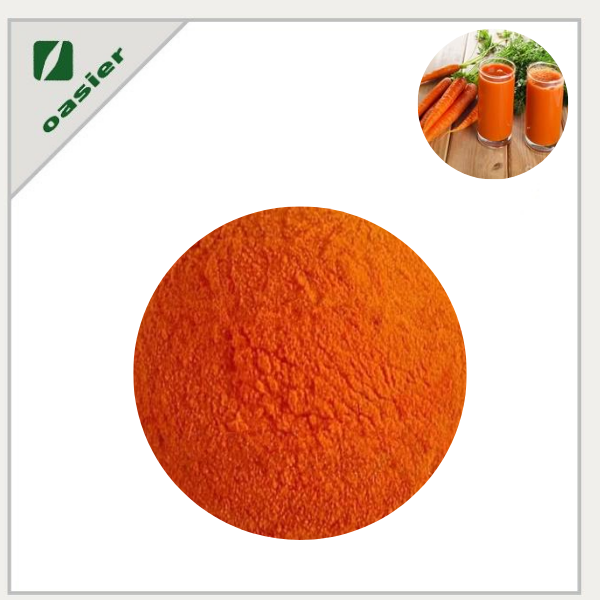
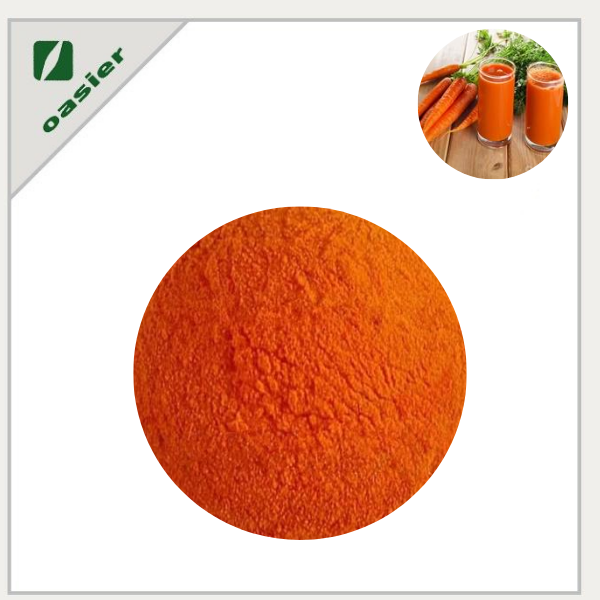
Carrot juice powder is a powdered product made from fresh carrots through processes including washing, juicing, concentration, and spray drying. It retains the nutritional components of carrots, such as beta‑carotene, vitamins, minerals, and dietary fiber, and features a natural orange‑yellow color and a mild vegetable‑fruit flavor. It is now widely used in various food categories.
Solid Beverages & Meal Replacement Powders
Carrot juice powder is a common ingredient in fruit and vegetable solid beverages, used for blending carrot drinks, milkshakes, and fruit‑and‑vegetable instant mixes. In meal replacement powders and nutrition‑fortified foods, it provides natural color and a source of vitamin A.
Bakery Products
In the bakery sector, carrot juice powder is used to make carrot bread, cakes, cookies, and biscuits. Replacing a portion of flour (e.g., 10% substitution) with carrot powder enhances the nutritional value of baked goods while imparting a natural orange‑yellow hue.
Baby Foods & Nutritional Supplements
Carrot juice powder is commonly used in infant complementary foods and nutritional supplement products. Its natural sweetness and fine powder form allow easy mixing with other ingredients, making it suitable for developing nutrition‑fortified products for children and the elderly. Recommended addition levels range from 5% to 20%.
Dairy Products, Frozen Desserts & Cold Beverages
In dairy products and cold beverages such as yogurt, flavored milk, ice cream, and cold drinks, carrot juice powder can serve as a natural colorant and flavor enhancer. It imparts a mild orange‑yellow tone and a subtle carrot aroma, eliminating the need for artificial colors.
Seasonings, Sauces & Convenience Foods
Carrot juice powder can be used in soup bases, salad dressings, sauces, and ready‑to‑eat meals. In extruded snacks and food, it serves both as a seasoning and a natural colorant. In pasta products (e.g., noodles, spaghetti), it acts as a natural coloring and nutritional fortifying ingredient.
Compressed Candies & Functional Foods
In formulations for compressed candies and nutrition bars, carrot juice powder demonstrates good processing adaptability, allowing it to be paired with various excipients to develop visually appealing functional foods.
| II. Our Adaptability Solutions for Carrot Juice Powder |
|
While carrot juice powder may seem straightforward, different application scenarios impose very different requirements on the powder. We have implemented the following targeted optimizations to address common issues encountered by buyers.
1. Color Stability – Keeping the Orange‑Yellow "Consistent"
The color of carrot juice powder mainly comes from beta‑carotene, which is sensitive to light, oxygen, and high temperatures. The beta‑carotene content in raw carrots from different batches can vary by more than 20%.
Raw material blending: Within the same harvest season, we test multiple batches of carrots for beta‑carotene content and blend them accordingly, compressing batch‑to‑batch variation to within ±8%.
Process protection: Spray drying is carried out at controlled low temperatures throughout the process to reduce degradation of heat‑sensitive pigments.
Antioxidant protection: A trace amount of natural antioxidant is added to the concentrate to inhibit oxidative fading during processing and storage.
Color difference control: Each batch is tested for color difference (ΔE), which is controlled within 3, making any variation virtually imperceptible to the naked eye.
2. Solubility & Dispersibility – Instant Dissolution in Water
Carrot juice powder sometimes dissolves slowly in cold or ambient‑temperature water, tending to form clumps or suspended particles.
Particle size control: Standard products pass through an 80–100 mesh sieve, increasing the specific surface area for rapid wetting in water.
Instant‑type specification: For solid beverage customers, we offer instant carrot juice powder that completely disperses within 5–10 seconds with minimal sediment.
Anti‑caking treatment: A trace amount of food‑grade anti‑caking agent is added to prevent moisture absorption and caking during storage and transportation.
3. Flavor Purity – Authentic Carrot Taste
Some commercially available carrot juice powders may have cooked, grassy, or caramelized off‑notes due to raw material or processing issues. Our approach:
Variety selection: We use red‑heart carrots, which are high in beta‑carotene and have a pure, authentic flavor.
Processing time control: Fresh carrots are promptly processed after harvest to minimize flavor changes caused by enzymatic reactions.
Low‑temperature concentration: Avoids the cooked flavor produced by prolonged high‑temperature heating.
Sensory evaluation: Each batch undergoes blind testing by our internal sensory panel to ensure the flavor matches the standard reference.
4. Moisture Absorption & Caking
Carrot juice powder is naturally high in sugars and tends to absorb moisture and cake in humid environments. Our measures:
Moisture control: Finished product moisture is strictly controlled to reduce the risk of moisture absorption at the source.
Anti‑caking agent premix: For customers in high‑humidity regions, we can premix food‑grade silicon dioxide.
5. Compatibility in Blends – Avoiding Reactions with Alkaline Ingredients
Beta‑carotene in carrot juice powder is less stable under alkaline conditions and may darken in color.
pH adjustment recommendations: We provide dosage recommendations based on the customer's final product pH. The color remains stable in the pH range 4.0–7.0. Above pH 7, we recommend increasing the addition level or using an alkali‑resistant specification.
Isolation packaging advice: For products where pH adjustment is not feasible, we offer process recommendations for segregated addition.


| III. Quality Control & Supply Capability |
|
Quality Control
Raw material: Fresh red‑heart carrots sourced from major production areas such as Shaanxi and Shandong. Each batch is tested for pesticide residues and heavy metals.
Production process: Fresh fruit washing → peeling → juicing → enzymatic treatment → filtration → concentration → spray drying → sieving → metal detection.
Finished product testing: Each batch is tested for beta‑carotene content, moisture, ash, total plate count, coliforms, Salmonella, lead, and arsenic. COA, MSDS, non‑GMO statement, and allergen declaration are provided.
Batch consistency: Raw materials from the same harvest season are blended to control key indicator variation within ±8%. Retained samples are kept for 24 months for traceability.
Supply Capability
Monthly production capacity: 20 tons (conventional spray‑dried powder), expandable flexibly.
Safety stock: 5 tons of standard specification (80 mesh) always on hand.
Packaging: 1 kg aluminum foil bags (samples), 5 kg/10 kg/25 kg composite bags or cartons lined with PE bags.
Lead time: Samples within 3 working days; regular orders within 7–12 working days; expedited orders can be compressed to 5 days.
Export support: Provide customs clearance documents including Certificate of Origin, Phytosanitary Certificate, Health Certificate, and Free Sale Certificate.
| Specification |
|
SPECIFICATION | ||
Product Name: Best Organic Carrot Juice Powder | Origin of Material: china | |
Botanical Source: Organic Carrot | Part Used: root | |
ANALYSIS | SPECIFICATION | REMARK |
Appearance | yellow fine powder | |
Odor | Characteristic | Organoleptic |
Taste | Characteristic | Organoleptic |
Sieve Analysis | 95% pass 80 mesh | |
Loss on Drying | ≤5% | 2 hours at 105°C |
Bulk Density | 40-60g/100ml | |
Total Ash | ≤5% | |
Heavy Metals | ≤10ppm | EP2.4.8 |
As | ≤1ppm | ICP-MS |
Pb | ≤3ppm | ICP-MS |
Microbiological Test | ||
Total Plate Count | ≤10000cfu/g | |
Yeast & Mold | ≤1000cfu/g | |
E.Coli E | Negative | |
Salmonella | Negative | |
Storage: In a cool & dry place. Keep away from strong light and heat. | ||
Shelf Life: 2 years when properly stored. | ||
* There is likely to be minor color variation from batch to batch due to geographical(origin) and seasonal variations of the material. | ||
| Factory |
|

| Production prograss |
|

| Packing |
|

| logistic |
|


